
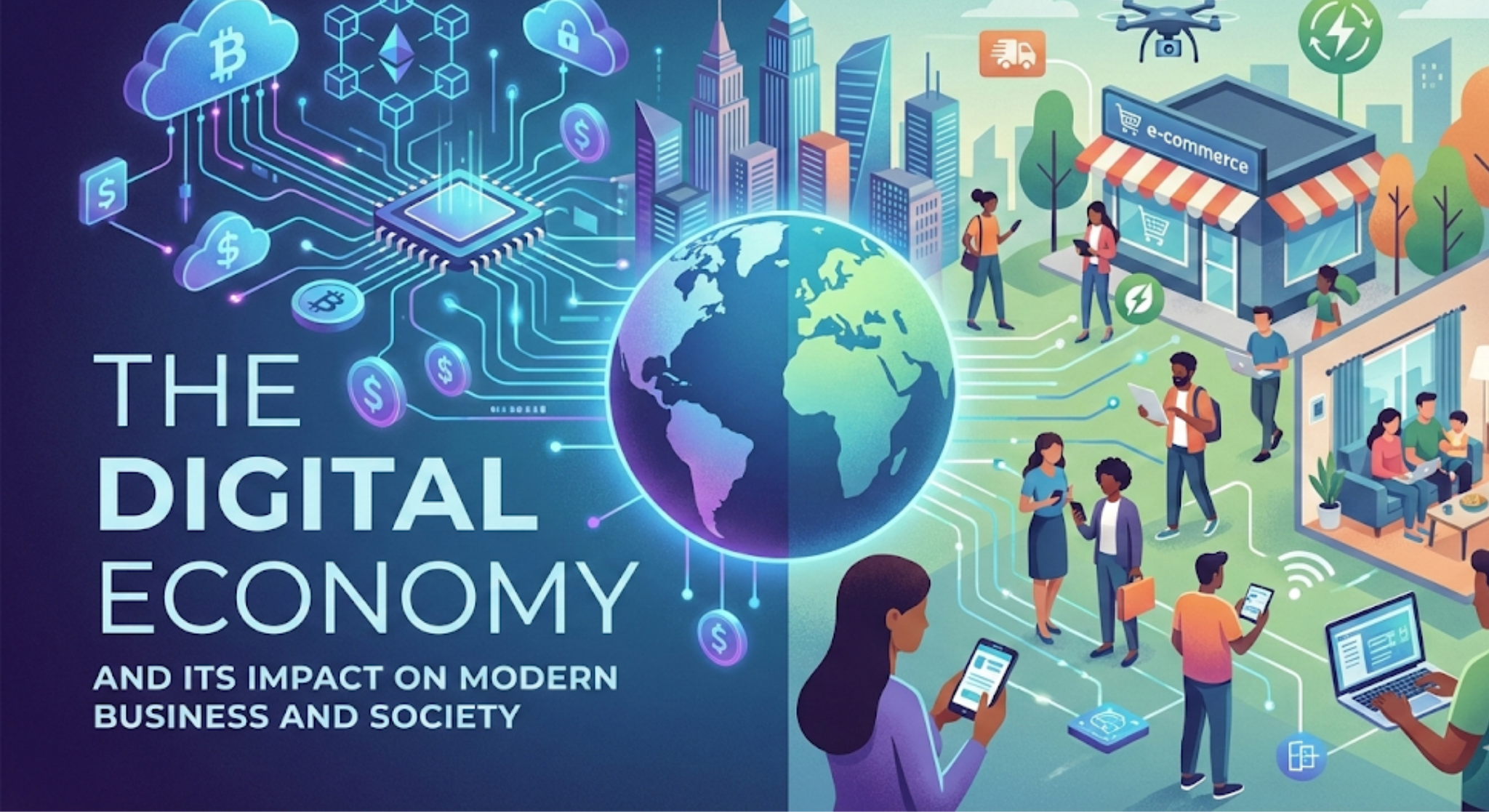
The digital economy describes an economic system where digital technologies shape production, trade, and consumption. It goes beyond online transactions to include digital platforms, intelligent systems, and technology-driven services that influence how societies function. As digital adoption accelerates, the digital economy continues to redefine traditional economic models.
One of the most visible impacts of the digital economy is the transformation of business models. Companies increasingly rely on digital platforms to deliver products and services. Subscription models, on-demand services, and platform-based marketplaces have emerged as dominant structures. These models offer flexibility, scalability, and closer engagement with customers.
Digital infrastructure forms the foundation of the digital economy. High-speed internet, mobile networks, and cloud services enable seamless connectivity and information flow. This infrastructure supports innovation by allowing businesses to deploy solutions quickly and efficiently. Reliable digital infrastructure is essential for economic resilience and competitiveness.
Another key element is digital entrepreneurship. The digital economy empowers individuals to start businesses with minimal physical resources. Online stores, digital content creation, and software-based services have lowered barriers to entry. Entrepreneurs can test ideas rapidly and reach global audiences without traditional limitations.
The digital economy also reshapes consumer behavior. Digital access provides customers with more choice, transparency, and convenience. Consumers can compare products, read reviews, and make informed decisions instantly. Businesses must adapt by prioritizing user experience, responsiveness, and trust.
Education and skills development are increasingly important within the digital economy. As technology evolves, demand grows for digital literacy, data analysis, and technical expertise. Lifelong learning and skill adaptation are essential for individuals to remain competitive in a technology-driven environment.
Social and economic inclusion is another significant dimension. Digital platforms can connect underserved communities to markets, information, and services. Mobile technology, in particular, plays a role in expanding economic participation. However, addressing digital divides remains crucial to ensure equitable access.
The digital economy also introduces new responsibilities. Cybersecurity, ethical technology use, and regulatory frameworks must evolve alongside innovation. Balancing growth with security and privacy is a critical challenge for policymakers and organizations.
In conclusion, the digital economy is reshaping modern business and society through innovation, connectivity, and new economic models. Its continued development will influence how people work, interact, and create value in an increasingly digital world.